
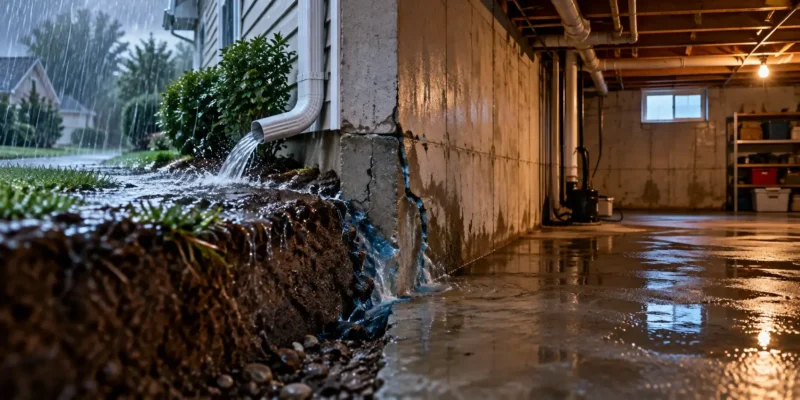
Heavy rain can quickly expose weaknesses in a basement’s drainage and waterproofing system. Water may appear as damp spots, puddles, wall seepage, or moisture around the floor. While the problem may seem temporary, repeated water intrusion can affect basement surfaces and contribute to ongoing moisture issues.
Finding the reason why water enters the basement is the key to choosing the correct solution. A basement waterproofing Long Island contractor is in the best position to solve the most common ways water enters a basement, and protect the foundation from ongoing, recurring moisture problems.
Why Does Water Enter the Basement After Heavy Rain?
When rainfall is heavy, the ground surrounding a home can become saturated. If the soil cannot absorb additional water quickly enough, moisture may collect around the foundation. Water can then find its way through existing cracks, joints, porous masonry, or other weak points.
Hydrostatic pressure can also develop when water accumulates in the soil around foundation walls. This pressure may push moisture through small openings that were not noticeable during normal weather conditions.
Common Causes of Basement Water After Rain
Several conditions can contribute to basement moisture:
- Poor Drainage Around the Property: If rainwater is not directed away from the foundation, it can collect next to basement walls. Proper grading and drainage can reduce the amount of water reaching the foundation.
- Blocked or Poorly Positioned Gutters: Gutters and downspouts help move roof runoff away from the house. When they are clogged, damaged, or releasing water too close to the foundation, large amounts of rainwater can accumulate around the basement.
- Foundation Cracks and Masonry Damage: Small cracks in foundation walls or deteriorated masonry can provide pathways for water. Older properties may require inspection by an experienced Masonry contractor Long Island to identify damaged brickwork, mortar joints, or other masonry concerns.
- Groundwater and Hydrostatic Pressure: After prolonged or heavy rainfall, groundwater levels can rise. Increased pressure against basement walls may cause water to enter through cracks, joints, or porous materials.
How Basement Waterproofing Can Help
Basement waterproofing Long Island solutions need to look for the source of water and not just cover up visible dampness. Possible solutions may include improved drainage, sump pump systems, interior drainage systems, exterior waterproofing, and/or foundation repairs, depending on the situation.
A professional assessment can help determine whether the problem is caused by surface runoff, groundwater, foundation damage, or a combination of factors.
Choosing the Right Professional
Basement water problems can involve more than waterproofing alone. If damaged brick, mortar joints, foundation masonry, or exterior walls are contributing to water entry, masonry repair may also be necessary.
Brick Pointing NYC offers masonry and associated property repair services to homeowners for concerns regarding the exterior of their buildings. Sometimes when the cause of moisture in a basement is not determined and a repair is done, moisture may continue to be an issue. This is because the selected repair may not have addressed the cause of moisture.
Conclusion
Heavy rain can identify hidden drainage, foundation, and masonry issues that may be present during dry weather. Ignoring these issues can cause moisture problems in basements.
If water continues to appear after storms, professional basement waterproofing Long Island assessment can help identify the source and determine an appropriate solution. For properties with masonry-related concerns, Brick Pointing NYC can also help evaluate the condition of exterior masonry and related areas.
FAQs
1. Why does my basement leak only after heavy rain?
Heavy rain can saturate surrounding soil, thereby increasing the water table and applying more pressure against foundation walls. This may allow water to enter through cracks, joints, and other passage ways.
2. Is basement water always caused by foundation cracks?
No. Some of the other causes of basement water may be poor grading and drainage, clogged gutters, high groundwater table, and other drainage issues.
3. When should I consider basement waterproofing?
If water intrusion happens repeatedly after rainfall, professional assessment can help identify the source and determine whether waterproofing or drainage improvements are needed.
4. Can masonry damage contribute to basement moisture?
Yes. Damaged bricks, deteriorated mortar joints, and other masonry defects can create pathways for water and may require assessment by a qualified masonry professional.